Saturday, March 5, 2016

Small Churches Matter!

19. That was how many people were present on my first Sunday as pastor of Washington Baptist Church, Washington, VT, which included my family of four. The church had never been large, even back in its glory years of the 1950’s, it had never averaged more than 45 or 50 in worship. It was a small church in a rural village in a rural state in northern New England. It was easy to feel like we were so small that nothing we did really mattered.

But for the 53 people who came to faith in Christ during the eight years we served that church, it made a difference. For the missionaries and mission projects that we raised money for, nearly $100,000 from our little church during that 8 year period, it made a difference. Though the church remains small, and it has been several years since we have been to that little village, they are still faithfully making a difference in their community and across New England through their involvement in disaster relief and through managing the Calef Retreat Center.

At a recent meeting I attended at the national office of the Southern Baptist Convention in Nashville, TN, I learned that 64% of all Southern Baptist churches have less than 100 in worship. And 81.4% have less than 200 in worship. Yet the SBC remains one of the most robust missionary organizations in the world. Small churches matter. They do make a difference.

If you lead a small church, or are a member of a small church, do not feel discouraged. Do not bemoan what you cannot do, instead celebrate what you can do. Look around your community, look around the larger region where you are located, and look around the world and do something. That something, no matter how small it may seem, when empowered by the Holy Spirit and added to a lot of other small churches’ “somethings” makes a huge difference.

God is working through small churches, and that is something to celebrate!


 --------------
Dr. Terry W. Dorsett has been a pastor, church planter, denominational leader and author in New England for more than 20 years. He is a happy husband, a proud father and adoring grandfather. He is a cancer survivor and believes that God works powerfully through times of suffering. He has written a book about the spirit of offense that prevails in our current society. You can find all of his books at:

Tuesday, March 1, 2016

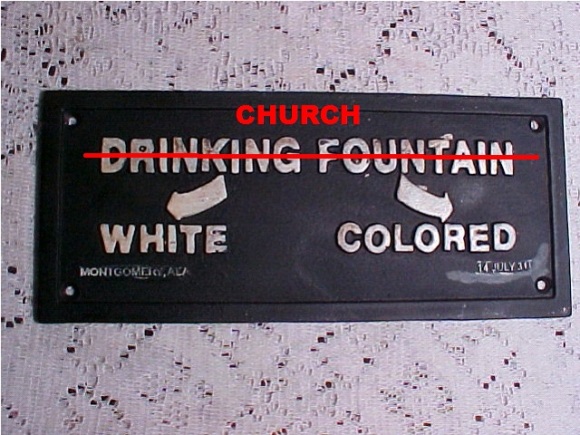
SEPARATION, EQUALITY, AND THE CHURCH - Guest post by Itamar Elizalde

I’ve often mentioned that I was born in the wrong decade. I absolutely love studying and reading about the civil rights’ movement of the 1950’s and 1960’s. I’ve pictured myself at sit-ins and marches, singing in churches awaiting a speech by Rev. Dr. King. I am fascinated with the non-violent movement, proud of those within the Church who stepped up against injustice and deeply saddened by the forces of people who used the Christian faith to justify their own comforts and a sinful status quo.
The emotions I feel about our history are perhaps what fuel my shock about our present complacency both culturally (in our wider secular context) and within the Church. Segregation is more prevalent today than it was right before the civil rights movement. I lead a workshop of high school freshmen and they could very well attest. Their school and neighborhood are “dominated” by Hispanics while the next town over “is all white people”. They are also quick to respond that it’s different today than it was in Rosa Parks’ era of civil disobedience. When asked why, students respond that it is because it is their choice. They choose to stay in their particular town and not move to the next town over. Nobody is forced. There are no signs to determine which race or ethnicity can live where.

It’s our choice. Equality is now the law. Separation is our choice. My response was, “so we’re essentially separate… but equal”.

The kids could recognize the phrase that carries a heavy connotation to anyone who has studied the civil rights movement, but it rings true today. Here are some thoughts on our current complacency that justifies separation and blinds us to our responsibility…

Separation limits our choices. I love being Puerto Rican. I really do. We’re an odd bunch and I love it. But there are some things I do not like about my culture. It’s prideful and stupid of me to accept things of my culture that are ineffective, irrelevant or, worse, damaging (although this happens all the time). There are things about the Asian culture (as a random example) that I love and incorporate in my life. Things that are solid, sound, and biblical. If I choose to separate myself, I limit my exposure—securing ignorance, delaying growth, stunting progress and exposingdisobedience. Freedom is based on a freedom to choose. Just as sin enslaves, thus giving the illusion of freedom but forcing us to live under its consequences, the sin of intentional separation gives the illusion of freedom but limits rather than liberates.
Separation erodes our understanding of one another.  I confess: I love shortcuts. I like spending less time to get to exactly where I need to go. Stereotypes often seem like shortcuts to genuine community. I’m guilty of this one all the time. I don’t need to ask her, I know she’ll say no because she’s like this… It leads me to believe that I know others when I really don’t. This essentially deceives us into believing we’ve taken a shortcut when it’s only deviated us from genuine community. This has only gotten worse through the polarization of our politics. There is no need to have a conversation with anyone who votes Democratic or Republican because, well, we already know what they will say. People become static; a caricature, even.
I don’t want to go into the dangers of caricatures, stereotypes, segregation and hate but instead speak with the Church. I do see a direct link between willing separation and facilitating stereotypes, even subtle ones. And while I like groups with similar interests in background because of the support they can often provide, I’m bothered when these are more common than (or even replace) our explicit efforts of integration.

So what, then, shall we do? We, the Church, need to lead efforts of explicit integration by incorporating diversity not only in policies but in preaching, teaching, mission statements, and outreach. Encourage conversation with like and unlike-minded people. Remind each other that Jesus ate with known liberal types and sat down with conservative judges and was willing to compromise his reputation with some without compromising his character.

We often watch television, look at our bi-racial president and believe Jim Crow is dead when he’s quietly making a living in our churches, social circles and implicit belief systems. Intentional separation, like any other sin, is to be fought with repentance and empowered by grace. We shouldn’t be okay with separate fellowships based solely on race. We shouldn’t be okay with distinguishing our worship styles based on ethnicity. And we shouldn’t be okay with not addressing these issues simply because we want to avoid difficult theological conversations that expose our desperate need for grace.

-----------------
Itamar lives in Central Mass and is a campus minister in the Worcester area. She describers herself as a petite Puerto Rican with not so petite thoughts. This post, which was used with her permission, originally appeared on her blog, which can be read at:
https://itamah.wordpress.com/2011/05/21/separation-equality-and-the-church/

Thursday, February 25, 2016

Who Will Lead?

Earlier this week I was at a meeting of key leaders from the denomination I am affiliated with. The President of the denomination gave a powerful challenge not only for us to be leaders, but to ask ourselves WHERE we should be leading people. I have been pondering his words and considering the leadership vacuum that exists in our culture.

Families are in trouble. Though many factors contribute to that stress, what is missing most are fathers who are willing to lead their families in the way that God intended. Thank God for all the single moms who are making things work. But I think every single mom would agree that if the Lord gave her a good man who would be the kind of husband and father that was really needed, her family would become stronger. Fathers need to lead, but they cannot lead when they do not know where to lead.

Churches are in trouble. Though many factors contribute to the decline of church attendance in our culture, what is most missing are deacons, elders and pastors willing to lead. Many want a position of leadership, but few want to do the work of being a leader. Thank God for the older generation that has led for so long, but if a new generation does not step up to the plate and lead, a large number of churches will not exist in the next decade. Churches need leaders willing to do the work that is required of leaders.

Economies are in trouble. Though many factors contribute to the financial challenges families, organizations and governments are experiencing, what is most missing are leaders willing to make the hard choices that will provide for long term financial security. Families that do not save for their future are unlikely to ever get to the future they want. Organizations that use money in unwise ways, will experience a crisis of donor confidence that eventually lowers giving. Governments that cater to special interest groups instead of making decisions that are best for the larger group become paralyzed. We need leaders willing to make the hard choices even if not everyone agrees with those choices.

Everywhere we look leadership is in great demand but short supply. There are no easy answers. It is has been so long since many of us have seen really good leaders that we may not even know what they look like.

As I pondered this, I found these verses of scripture. They describe the kind of leaders we need. Men and women who lead like this will know who they are and where they need to lead us to. They can save families, churches and economies. May God help us be leaders like this!


Philippians 2:3
Do nothing from selfishness or empty conceit, but with humility of mind regard one another as more important than yourselves;
Luke 6:31
"Treat others the same way you want them to treat you.
"It is not this way among you, but whoever wishes to become great among you shall be your servant,
John 3:30
"He must increase, but I must decrease.

When the righteous increase, the people rejoice, But when a wicked man rules, people groan.


--------------------------------

Dr. Terry W. Dorsett has been a pastor, church planter, denominational leader and author in New England for more than 20 years. He is a happy husband, a proud father and adoring grandfather. He is a cancer survivor and believes that God works powerfully through times of suffering. He has written a book about the spirit of offense that prevails in our current society. You can find all of his books at:

Wednesday, February 24, 2016

In the Middle of a Pity Party - Guest Post by Dave Bentley


Yesterday my friend Terry Dorsett posted something on Facebook that drew me into Psalm 46. I realized that I have been throwing a little pity party lately because of the physical and financial struggles that my wife and I have been facing. Looking at our struggles so closely has moved my focus from the “very present help in trouble” to just the trouble.

The financial hardship has been significant. The physical struggles, especially for my beloved, have been difficult. The troubles we face are large. However, God is able to work wonders, even in the midst of the troubles. He has seen us through and has provided what is needed at the moment it is needed. He has proven time and time again that He is my refuge and strength, and my very present help in trouble.

Wait….look at that verse again.

Psalm 46:1
God is our refuge and strength, A very present help in trouble.

Did you catch that little word slipped into the message of that verse? It states that God s “a very present help…IN…trouble.” Now, I would much rather that God were “the present help keeping me out of trouble,” but His word assures me that, though I face hardship, He is there with me IN the difficulty.

Financial challenges of car payments, educational pursuits, and a variety of mounting expenses may loom large, but God is “a very present help IN trouble.”

Health problems such as dental expenses, slow recovery, extended illness, and unexplained pains are difficult to bear, but God is “a very present help IN trouble.”

The demands of life and work may seem overwhelming, the piles of unfinished assignments may be expanding daily, and the energy needed to complete the work may seem unavailable, but God is “a very present help IN trouble.”

The message for me, in the midst of all my worry, is that God is PRESENT and IN the midst of my life’s trouble. I do not need to fear, worry, or panic. What I need is to trust and rest in the One who is my REFUGE and STRENGTH.

Pray for me, and I will pray for you as well, for God to be our refuge IN the midst of our  trouble.

Blessings,
Dave Bentley

----------------------------------
Dave Bentley is the pastor of First Baptist Church, Wallingford, VT and a middle school teacher in the public school system. He blogs frequently at: http://bigdbentley.com/


Thursday, February 18, 2016

Generous Racism

Acts 10:34-35 - So Peter opened his mouth and said: Truly I understand that God shows no partiality, in every nation anyone who fears him and does what is right is acceptable to him.


My friend Thomas* is a well-educated professional. He is a recognized leader in his field. He is a published author. He has a lovely wife, who is also a well-educated professional, and two lovely children. He is a picture of the perfect American family and would be considered successful by any reasonable standard. He also happens to be African American.

When Thomas felt a call to ministry, God gave him a heart to help people from urban areas find ways to create a better life for themselves in self-sustainable ways. He has some very innovative ideas for how to fuse business and ministry models so that ministry in an urban setting can have all the resources needed to support a holistic approach. With his education and experience, Thomas could easily serve an affluent suburban congregation. But he has chosen to minister in an urban context, which means that many of those he serves have fewer financial resources, and many are from various minority groups common to urban areas.

He and I were talking a couple of months ago about how to find capital investors who could help him get his unique business/ministry model off the ground. In the midst of the conversation he said something that has reverberated in my mind over and over again. He said, “Sometimes affluent people see minorities as their charity cases” and went on to explain that many affluent people only want to fund things that make them “feel good about themselves instead of actually solving the problem.” For example, affluent people are happy to spend money buying several bags of groceries for the local food bank, but few would buy their weekly groceries from a small minority owned local market. One makes the donor feel good about themselves but only addresses the symptom. The other would help create a successful business man who would then be able to provide jobs in the community so fewer people needed the services of a food bank but it is not as emotionally exciting. Many affluent people are willing to volunteer at a soup kitchen every month, but far fewer are willing to be a mentor to a disadvantaged young person, helping he/she get through high school and into a good college so he/she secure a job and never have to depend a soap kitchen for a meal. Both volunteer efforts are worthwhile, but one perpetuates dependence and the other solves a problem.

When those of us with greater resources view minorities as our charity cases, we are unintentionally displaying generous racism. Though we may be proud of ourselves for our generosity, it is still a form of racism if the only thing we support are “feel good” projects. When we only want to donate or volunteer in ways that set us up as superior to those of other races or of other economic levels, it might make us feel good but it also keeps people from reaching their full potential. This generous racism is still racism, and should not be encouraged.

Does this mean we should stop buying groceries for food banks or volunteering at soup kitchens? No. But we should view those efforts as one part of a bigger picture of how we address the challenges of urban dwellers, a significant number of which happen to be from various minority groups. We must look for ways that actually solve problems and that must include viewing minorities as fully capable of succeeding in life, and not as just our charity cases.

And if you happen to be a venture capitalist that wants to get in on the something cool in the greater Hartford, CT, area, contact me and I will put you in touch with Thomas. You will be impressed!


*Name changed for privacy reasons

-------------------------------------------

Dr. Terry W. Dorsett has been a pastor, church planter, denominational leader and author in New England for more than 20 years. He is a happy husband, proud father and adoring grandfather. He is a cancer survivor and believes that God works powerfully through times of suffering. He has written a book about the spirit of offense that prevails in our current society. You can find all of his books at:


Wednesday, February 17, 2016

Don't Judge Me

1 Corinthians 11:31-32 - If we were properly evaluating ourselves, we would not be judged, but when we are judged, we are disciplined by the Lord, so that we may not be condemned with the world.

“Do not judge me!” We hear it all the time. Pop singers who do perverted things on stage say it. Movie stars who get DUIs say it. Politicians who have affairs say it. Co-workers who show up to work with a hangover say it. Friends who have made a real mess of their lives say it. Sometimes, we say it ourselves when someone points out our obvious faults.

Our culture has become obsessed with the idea that no one should say that any particular action is wrong. For the most part, people have accepted the idea that no one should think negatively of another person for his or her behavior. Such negative thinking is considered judging. Judging has become the ultimate bad behavior. If anyone does point out that someone's behavior was in poor taste, or just plain wrong, the speaker is the one who is criticized, not the person who actually did wrong.

This may be an acceptable line of reasoning for our culture, but it ultimately leads to disaster. If everyone does what is right in their own eyes, society devolves into chaos. That is why God gave us rules to follow. But who gets to interpret what God says the rules are?

I grew up in a very rigid religious environment in which we categorized everyone's behavior as either good or bad. This was often done without really knowing the person’s heart or any of the details of the actions. In our quest for purity we separated ourselves from those who engaged in actions we deemed bad. Many people were hurt by our judgmental behavior. I no longer want to be the behavior police with some mandate to classify every behavior that anyone around me does as being right or wrong. I also do not want to watch friends ruin their lives because I am too cold-hearted to speak to them about issues they are struggling with. Some behavior is just plain wrong, and one does not have to be a religious fundamentalist to recognize that truth. Somewhere between the two extremes of never saying anything and always pointing out everything is the thin line that we should walk that shows care and concern without being judgmental.

Finding that thin line is a constant struggle. One thing that helps is to ask people questions about the things they do. By asking them questions about certain behaviors, instead of just telling them it is wrong, their own thinking is often stirred up. Sometimes they are able to rethink their own behavior and state their own need to change. This can lead to a redemptive conversation about Christ and forgiveness. Even if they do not recognize the behavior as bad, it still makes them think, and sometimes that is the best thing we can help people do.

Ultimately, God is the one who judges all of us, and He is the one who gets to decide what is good or bad behavior. Though many of our non-believing friends may not care what God thinks, it is our responsibility as Christians to help them get to that place. By asking questions that force them to rethink their behavior, we can move on to a place where we can share what God’s Word teaches. It may take several conversations, over a period of time, to get there, but we will eventually get there, without having to negatively judge others.

Lord, help us know how and when to say something to a friend about his or her behavior. Guard us from having a judgmental spirit but also remind us of the importance of holiness. Amen.

-----------------------------------------------------------

This post is an excerpt from the book, The Heavenly Mundane: Daily Devotions from Ordinary Experiences. Filled with stories of how God spoke in big ways through small events, the book will encourage people to look for God in the mundane things of life. Great for both personal use and to give as a gift to friend, either the print version or the e-book version may be purchased at this link:
http://www.amazon.com/dp/B00MJ2UE4E

Wednesday, February 10, 2016

Do Overs - Guest Post by Chris Beltrami

I remember being 12 years old  … in the summer …  in Vermont. Almost every day, the kids would gather at the Barre Auditorium ball fields for some baseball pickup.   We would ‘grip-up’ the bat to see who would get first choice in picking the teams.   On an average day - we’d have:
One broken bat – with a screw holding it together and some black electrical tape
stretched around the gripping area.   
A ball – with missing the leather and seams seasoned away and repaired with the same black electrical tape.
Some gloves – shared by kids who had with those kids who did not.
Home plate, pitchers mound and bases – all “heel-marked’ in the dirt.
Disagreements – with yelling, screaming and fighting.
It was so great!!!
 
55 years later, my wife Pat and I play water volleyball… almost everyday!!!   While the equipment is top notch, the disagreements for us competitive Seniors are similar to when I was 12.   “Out of bounds”?  “Lift”?    “Carry”?   The “Score” ?????????????    Oy!
One guy often says, “What we need in this pool is some adult supervision.!”
 
Our only saving grace for our supposed gained wisdom is what we call a “do-over.”    This happens, when after 30 to 60 seconds of eye rolling, power playing, water splashing, whispered comments, and childish expletiving (that’s not a real word), etc. … someone yells. “Do over!”   That means that the play from the last serve is forgotten.   The current score remains, no one is penalized and the person starts a new serve.
           
I like “Do-overs”.         
            I like them in water volleyball and I like them regarding God’s grace.
            I think God made the days and the nights for me so that, every 24 hours, I could have a new beginning.  A “do-over’.  That means that play from the last day is forgotten.   I am not penalized and I can start a new serve.
 
Romans 8:38-39  “For I am convinced that neither death nor life, neither angels nor demons, neither the present nor the future, nor any powers, 
 neither height nor depth, nor anything else in all creation, will be able to separate us from the love of God that is in Christ Jesus our Lord.
 
I wake each day with thankfulness to Him … that He forgives me and that nothing can separate me from His grace and His love.  Sometimes I feel a bit guilty that I have to ask for so many do-overs, but I remain so very thankful that I can.  
So, think about it - the next time you are anxious about the score, look into His eyes of grace and be thankful that He speaks forth so freely, “Do-over!”


                                                                                 - Chris Beltrami - Barre, VT